What's Changing? - Memory
Please see below recent memory-related change.
See also:
- What's New? - Memory
- What's Changing? - Ageing
- What's Changing? - Health
- What's Changing? - Sleep
- On Ancestry
- On Marcel Proust
- On Nostalgia
March 2024



Please see below recent memory-related change.
See also:
March 2024
Halcyon curates the most significant memory-related content from carefully selected sources. Please contact us if you'd like our help with memory-related challenges.
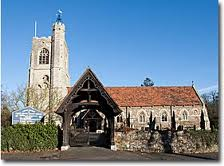
"I thought I saw a swallow land, upon my hand, on summer day" - Roy Harper
For the gardener, this is the peak of the year in the Northern Hemisphere, and weeks following Midsummer Day are a time of quietness, of flower festivals, of fragrant old roses around mildewed old church doors and of wandering among indecipherable gravestones and of coming hollyhocks and of lemon balm and of long, long ago memories, but always of "history is now, and England".

The growing good of the world is partly dependent on unhistoric acts...half owing to the numbers who lived faithfully a hidden life and rest in unvisited tombs - George Eliot, Middlemarch
Authoritative lists of supposed global role models provoke approval and controversy in equal measure, but also raise the more important question: who is honouring the vastly greater number of non-celebrity role models among our human family of perhaps 7.8 billion alive today?

Please see below selected recent legacy-related change.
See also:
August 2022
May 2022
The weird idea that Earth could be getting a second sun, at least temporarily, if Betelgeuse, one of the night sky's brightest stars, goes supernova, recalls a dream, many years ago, of climbing a ridge in the desert and seeing a dawn uncannily like this photo...

If the past is replayed too fast, life seems futile, and humanity resembles water flowing from a tap, straight down the drain. A film of history for today needs to be in slow motion, showing every person who ever lived as a star, though dimly visible in a night sky, a history still unexplored - Theodore Zeldin, An Intimate History of Humanity
A call to action. Time to explore these unexplored histories together.
Celebrating the TV of my youth...
some kids tv classics
Posted by 70s 80s 90s kids this is how we rolled. on Saturday, 24 October 2015

If the past is replayed too fast, life seems futile, and humanity resembles water flowing from a tap, straight down the drain. A film of history for today needs to be in slow motion, showing every person who ever lived as a star, though dimly visible in a night sky, a history still unexplored - Theodore Zeldin, An Intimate History of Humanity
A call to action. Time to explore these unexplored histories together.
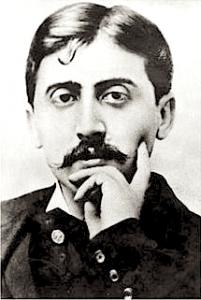
I realised that the essential book, the one true book, is one that the great writer does not need to invent, in the current sense of the word, since it already exists in every one of us — he has only to translate it. The task and the duty of a writer are those of a translator - Marcel Proust
After the BBC opened up its archives of In Our Time, I came to the episode about Marcel Proust.