What's Changing? - Childhood

Please see below recent childhood-related change
See also:
- What's New? - Childhood
- What's Changing? - Ageing
- What's Changing? - Education
- What's Changing? - Family
- What's Changing? - Youth
In figures:
May 2024



Please see below recent childhood-related change
See also:
In figures:
May 2024

Please see below recent demographics-related change.
See also:

Please see below selected recent migration-related change.
See also:
May 2024

Please see below a range of 2023 outlooks and forecasts, grouped by topic.
ALL TOPICS

Please see below a range of 2021 outlooks and forecasts, grouped across the following 21 topics.
There is also a bonus list of additional 2021 forecasts in appendix.
See also:
In 1960, the average life span globally was 52.6 years. Today it’s 72 years. The reasons include improvements in child survival, expanded access to healthcare (including widespread vaccination), and people being lifted out of extreme poverty.


HOW GLOBAL POPULATIONS REACHED ITS CURRENT LEVEL
It took 200,000 years for our human population to reach 1 billion—and only 200 years to reach 7 billion. But growth has begun slowing, as women have fewer babies on average. When will our global population peak? And how can we minimize our impact on Earth’s resources, even as we approach 11 billion?
POPULATION GROWTH IS NOW DECLINING
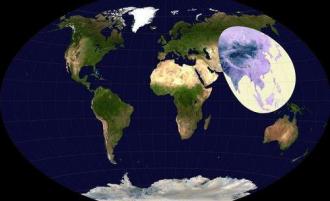
According to the World Bank, more people now live inside this circle than outside of it - see @WorldBank pic.twitter.com/iN1gDHaFiV.
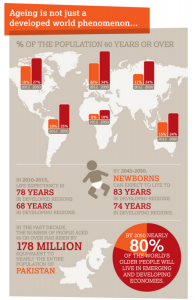
Within next 10 years, there will be 1 billion older people worldwide. By 2050 nearly one in five people in developing countries will be over 60. Check out this infographic by HelpAge International, an agency that helps older people lead dignified and healthy lives to see how the world demographic will change in the coming years. Delve into the latest data on ageing via the HelpAge International website.