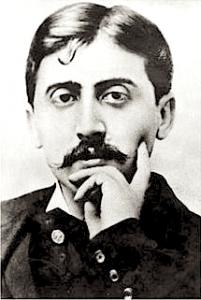
After the BBC recently opened up its archives of In Our Time, meaning that podcasts are now available right back to 1998, my listening experiences - typically while driving or running - have been further enriched by the availability of dozens of older editions, many on subjects that intrigue me, but about which in truth I know little. In such a vein, I came to the In Our Time episode about Marcel Proust.
As the programme notes make clear, 'À La Recherche du Temps Perdu has been called the definitive modern novel. Proust's stylistic innovation, sensory exploration and fascination with memory were to influence a whole body of thinkers, and innumerable critics and novelists since. But how did he succeed in creating a 3000 page novel with such an artistic coherence?'
Listening to the programme, I was immediately fascinated by concepts such as involuntary memory, which resonates with what I often feel, particularly when in the hypnopompic state, but other questions popped into my head too: is the novel really about the past, the present or the future? is it universal, in both time and space, in terms of its relevance and appeal? has anyone else ever written quite like Proust and if not, why not?
Only one way to find out, I suppose...avoid becoming yet another coffee-table Proustian and tackle the real thing...so I'll try and revisit this post with my own thoughts (and of course, memories) in 3000 pages time. À bientôt (I hope!)